
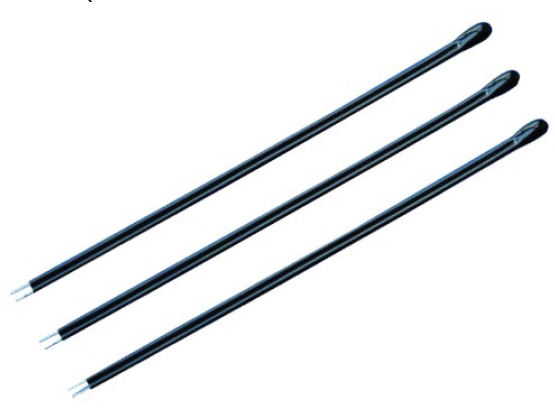
Temperature measurement is an essential part of modern electronics, HVAC systems, medical equipment, industrial machinery, automotive systems, and household appliances. Choosing the right sensing technology can directly affect measurement accuracy, response time, system reliability, and overall cost.
Among the most commonly used temperature sensing technologies are NTC thermistors, RTDs, and thermocouples. Each has a different operating principle and offers specific advantages for different applications.
An NTC thermistor is known for high sensitivity and fast response, while an RTD provides excellent accuracy and long-term stability. Thermocouples are widely used for high-temperature applications because of their broad operating range and rugged construction.
So, which temperature sensor is best? The answer depends on the temperature range, accuracy requirements, response time, installation environment, and cost of the application.
What Is an NTC Thermistor?
An NTC thermistor is a temperature-sensitive resistor with a negative temperature coefficient. Its electrical resistance decreases as the temperature increases.
Compared with conventional resistive temperature sensors, NTC thermistors can provide a significant resistance change over a relatively small temperature variation. This gives them high sensitivity and makes them useful for applications that need to detect small changes in temperature.
The NTC Thermistor can be manufactured in different shapes and configurations depending on the application. Common designs include bead thermistors, chip thermistors, probe sensors, and encapsulated thermistors.
NTC thermistors are commonly used in:
- HVAC and air-conditioning systems
- Household appliances
- Battery management systems
- Automotive electronics
- Power supplies
- Medical equipment
- Industrial control systems
- Consumer electronics
Their compact size, fast response, high sensitivity, and relatively low cost make NTC thermistors particularly attractive for electronic temperature monitoring.
What Is an RTD?
RTD stands for Resistance Temperature Detector. It measures temperature by detecting the change in electrical resistance of a metal element as temperature changes.
Platinum is the most widely used RTD material because of its excellent stability and predictable resistance-temperature relationship. Common configurations include Pt100 and Pt1000.
RTDs are known for high accuracy, repeatability, and long-term stability. These characteristics make them suitable for applications where precise temperature measurement is a priority.
Typical RTD applications include:
- Industrial process control
- Laboratory equipment
- Food processing
- Chemical processing
- HVAC systems
- Manufacturing equipment
- Energy systems
Compared with NTC thermistors, RTDs generally have a more linear temperature-resistance relationship. This can simplify signal processing and temperature calculation, especially in industrial measurement systems.
The main considerations include higher sensor cost, potentially larger physical dimensions, and more demanding measurement circuitry.
What Is a Thermocouple?
A thermocouple works according to the thermoelectric effect. It consists of two different metal conductors joined at one end. When there is a temperature difference between the measurement junction and the reference junction, the thermocouple generates a small voltage.
This voltage can be measured and converted into a temperature reading.
Common thermocouple types include Type K, Type J, Type T, and Type N. Different types use different metal combinations and provide different temperature ranges and characteristics.
Thermocouples are frequently used in:
- Industrial furnaces
- Ovens and kilns
- Boilers
- Engines
- Metal processing equipment
- Chemical processing
- High-temperature manufacturing
- Laboratory equipment
Their ability to withstand very high temperatures makes thermocouples an excellent choice for demanding industrial environments.
NTC Thermistor vs RTD vs Thermocouple: Key Differences
Although all three technologies measure temperature, their operating principles and performance characteristics are different.
| Feature | NTC Thermistor | RTD | Thermocouple |
|---|---|---|---|
| Measurement principle | Resistance change | Metal resistance change | Thermoelectric voltage |
| Sensitivity | High | Moderate | Relatively low |
| Accuracy | High within suitable range | Very high | Moderate to high |
| Temperature range | Low to moderate | Moderate to high | Very wide |
| Response time | Fast | Moderate | Fast |
| Long-term stability | Good | Excellent | Good |
| Cost | Low | Higher | Low to moderate |
| Physical size | Very compact | Moderate | Compact to rugged |
| High-temperature capability | Limited | Good | Excellent |
| Typical applications | Electronics, HVAC, appliances | Industrial measurement | High-temperature processes |
The table highlights an important point: no sensor technology is universally superior. The ideal option depends on the requirements of the application.
Accuracy Comparison
Accuracy is often the first consideration when selecting a temperature sensor.
RTDs are widely recognized for their high accuracy and excellent stability. They are particularly suitable for industrial applications where precise and repeatable temperature measurement is required.
NTC thermistors can also provide excellent accuracy when they are properly selected and calibrated for the intended temperature range. Their high sensitivity allows them to detect relatively small temperature variations.
Thermocouple accuracy depends on several factors, including the thermocouple type, reference junction compensation, wiring, installation, and measurement electronics.
Therefore, selecting a sensor based only on its sensing principle is not enough. The sensor's specifications should match the actual measurement conditions.
Response Time
Response time describes how quickly a sensor reacts to changes in temperature.
NTC thermistors can offer very fast response because their sensing elements can be manufactured in extremely compact forms. A smaller thermal mass generally allows the sensor to react quickly to temperature changes.
Thermocouples can also provide fast response, particularly when they use small-diameter probes or exposed junction designs.
RTDs may have a slower response depending on their construction and protective housing. Larger industrial probes typically have greater thermal mass, which can increase response time.
For applications that require rapid temperature monitoring, such as battery systems, electronic circuits, and HVAC controls, an NTC thermistor can provide an effective solution.
Temperature Range
The required operating temperature range is another major factor.
Thermocouples generally provide the widest temperature range among the three technologies. Certain thermocouple types can operate at temperatures far beyond the practical range of many NTC thermistors.
RTDs can also cover a broad temperature range while maintaining excellent accuracy and stability.
NTC thermistors are generally more suitable for specific temperature ranges. Their performance depends on the thermistor material, resistance value, B-value, encapsulation, and overall construction.
This makes NTC thermistors particularly useful when the expected operating temperature is clearly defined and falls within the sensor's specified range.
Environmental Protection and Sensor Construction
The sensing element itself is only one part of a complete temperature sensor. Mechanical construction and environmental protection can have a significant impact on service life.
Sensors installed in exposed environments may encounter moisture, vibration, dust, chemicals, or mechanical stress. In these situations, the sensing element needs suitable protection.
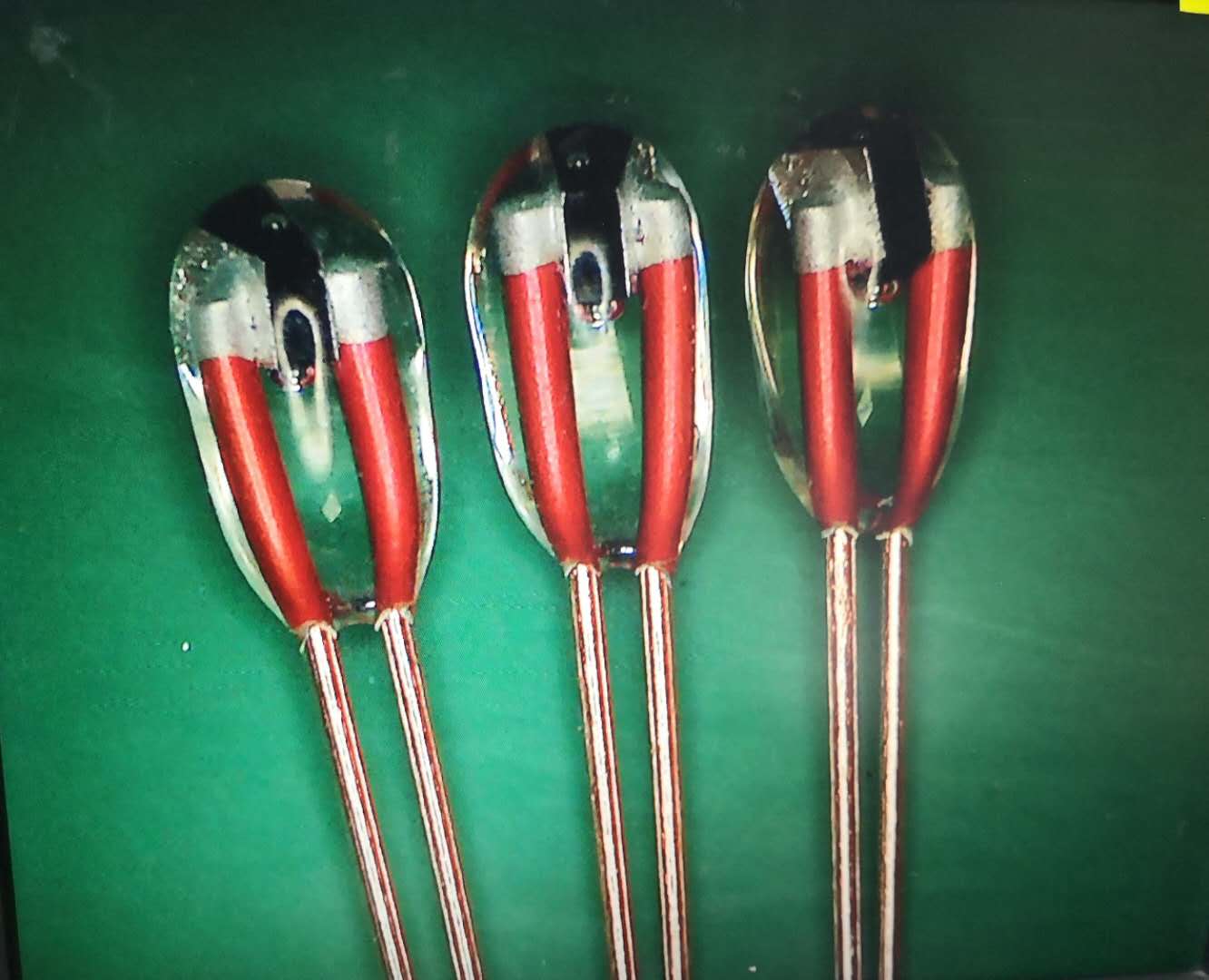
A Glass Encapsulated NTC Thermistor provides additional protection for the thermistor element while maintaining temperature sensing performance. Glass encapsulation can be useful in applications where resistance to moisture and environmental exposure is important.
Sensor housing is another consideration. A suitable Sensor Housing can provide mechanical protection and help position the sensing element correctly within the application.
The housing material, dimensions, mounting method, and thermal contact should all be considered when designing the final temperature sensing solution.
Which Sensor Is Best for HVAC and Appliances?
NTC thermistors are particularly suitable for HVAC systems and household appliances.
These applications typically require compact sensors, fast response, good sensitivity, and cost-effective temperature monitoring. NTC sensors can measure air temperature, water temperature, heat exchanger temperature, and other system parameters.
For example, air conditioners can use NTC sensors to monitor indoor and outdoor temperatures and provide temperature information to the control system.
The combination of high sensitivity, compact size, fast response, and flexible packaging makes NTC technology a practical choice for many HVAC and appliance applications.
Which Sensor Is Best for Medical Equipment?
Medical equipment often requires reliable and accurate temperature measurement within a specific operating range.
NTC technology is widely suited to applications where high sensitivity and fast response are important. Temperature measurement can be used in patient monitoring devices, diagnostic equipment, laboratory instruments, and other medical systems.
A dedicated Medical Temperature Sensor can be designed around requirements such as probe dimensions, response time, accuracy, insulation, and contact method.
For medical applications, sensor selection should consider the complete design, including electrical characteristics, mechanical construction, reliability, and compatibility with the equipment.
Which Sensor Is Best for Industrial Applications?
Industrial applications cover a wide range of temperature conditions, so the best sensor depends on the specific process.
RTDs are often preferred when accuracy, repeatability, and long-term stability are critical. They are commonly used for process monitoring and control.
Thermocouples are especially suitable for high-temperature applications such as furnaces, kilns, and industrial heating equipment.
NTC thermistors can be effective for industrial equipment operating within their specified temperature range, especially when compact dimensions, high sensitivity, and fast response are required.
Engineers should evaluate the actual operating environment before selecting a sensor.
How to Choose the Right Temperature Sensor
The following factors can help determine which technology is most suitable:
1. Operating Temperature Range
Start by determining the minimum and maximum temperatures that the sensor will experience. A thermocouple may be the better option for extreme temperatures, while an NTC thermistor can be ideal for a defined moderate-temperature range.
2. Required Accuracy
For highly precise industrial measurement, an RTD may be preferred. For temperature monitoring and control within a defined range, an NTC thermistor can provide excellent performance.
3. Response Time
Applications involving rapidly changing temperatures benefit from sensors with low thermal mass. NTC thermistors and certain thermocouple designs can provide fast response.
4. Installation Environment
Consider exposure to moisture, vibration, chemicals, pressure, and mechanical impact. Sensor encapsulation and housing should match the environmental requirements.
5. Size and Installation Space
Electronic products and compact devices often have limited installation space. NTC thermistors can be manufactured in very small configurations, making them suitable for space-constrained applications.
6. Total Cost
Sensor price is only one part of the overall cost. Engineers should also consider signal conditioning, wiring, installation, calibration, maintenance, and expected service life.
NTC Thermistor, RTD, or Thermocouple: Which One Should You Choose?
Each technology has a clear application advantage.
Choose an NTC thermistor when you need:
- High temperature sensitivity
- Fast response
- Compact dimensions
- Cost-effective temperature monitoring
- Temperature measurement within a defined range
- Easy integration into electronic systems
Choose an RTD when you need:
- Very high accuracy
- Excellent repeatability
- Long-term stability
- Reliable industrial process measurement
Choose a thermocouple when you need:
- Very high-temperature measurement
- A broad temperature range
- Rugged construction
- Industrial heating or processing capability
Conclusion
NTC thermistors, RTDs, and thermocouples are all reliable temperature sensing technologies, but their strengths are suited to different applications.
NTC thermistors offer high sensitivity, fast response, compact size, and cost efficiency, making them suitable for electronics, HVAC, appliances, batteries, and many medical applications. RTDs provide excellent accuracy and stability for precision measurement, while thermocouples are particularly valuable in high-temperature and harsh industrial environments.
The best temperature sensor should be selected according to the application's temperature range, accuracy requirements, response time, environmental conditions, physical space, and total system cost.
For applications that require a compact, sensitive, and responsive solution within a defined temperature range, an NTC thermistor can be an excellent choice. Selecting the appropriate encapsulation, housing, and sensor configuration can further improve reliability and performance.