
Introduction: The Silent Guardian of Thermal Management
In modern engineering, temperature is one of the most critical parameters to monitor and control. Whether it is a passenger car navigating city traffic, a lithium-ion battery pack delivering power to an electric vehicle, or an industrial motor operating under heavy load, excessive heat can lead to inefficiency, component degradation, or catastrophic failure. Among the various sensing technologies available, NTC thermistors have emerged as the preferred solution for a wide range of temperature measurement applications due to their high sensitivity, fast response time, and cost-effectiveness. This article provides a comprehensive overview of NTC thermistor working principles, explores their indispensable role in automotive and industrial temperature control systems, and examines the stringent manufacturing requirements—particularly high-temperature stability and glass-encapsulated designs—that separate reliable sensors from unreliable ones.
Part 1: What is an NTC Thermistor and How Does It Work?
Before diving into applications, it is essential to understand the fundamental physics behind NTC thermistors. NTC stands for Negative Temperature Coefficient, which means that the electrical resistance of the thermistor decreases as the temperature increases. This inverse relationship is opposite to that of most standard resistors (which have a positive temperature coefficient) and is what makes NTC thermistors exceptionally useful for precise temperature sensing.
The resistance-temperature (R-T) characteristic of an NTC thermistor is highly non-linear and is mathematically described by the Steinhart-Hart equation or, more simply, by the Beta (ß) parameter. The Beta value, typically expressed in Kelvin (e.g., 3435K, 3950K), represents the material's sensitivity and defines how steeply the resistance changes with temperature. A higher Beta value indicates a more dramatic resistance drop per degree Celsius, which is desirable for narrow-range, high-precision applications such as medical thermometers or automotive coolant monitoring. Conversely, a lower Beta value provides a flatter response curve suitable for wider temperature ranges.
NTC thermistors are manufactured from ceramic semiconductor materials, typically composed of manganese, nickel, cobalt, and copper oxides. These materials are processed through a series of steps including mixing, calcining, milling, pressing, and sintering to form a dense ceramic chip. Electrodes are then applied—either silver, nickel, or gold depending on the application—and the chip may be left bare, coated with epoxy, or hermetically sealed in glass. This manufacturing complexity directly impacts the device's long-term stability and reliability, especially when deployed in harsh environments such as engine compartments or industrial furnaces.
Part 2: Core Applications – The Critical Role of NTC Thermistors in the Automotive Industry
The automotive industry has undergone a dramatic transformation over the past decade. According to industry data, the average modern vehicle contains between 30 and 50 temperature sensors, a number that continues to rise with the proliferation of electric vehicles (EVs), hybrid powertrains, and advanced driver-assistance systems (ADAS). In conventional internal combustion engine vehicles, NTC thermistors manage engine efficiency and emissions. In hybrid and fully electric vehicles, they are even more critical, monitoring battery pack temperatures, inverter cooling systems, and electric motor windings to prevent thermal runaway and ensure optimal performance.
One of the most common and vital applications of the automotive temperature sensor is the Engine Coolant Temperature (ECT) sensor. The ECT sensor is typically a glass-encapsulated NTC thermistor mounted in the engine block or cylinder head, directly exposed to the engine coolant. Its role is fourfold: first, it provides the engine control unit (ECU) with real-time coolant temperature data to adjust the air-fuel mixture ratio. When the engine is cold, the ECU enriches the mixture to ensure smooth starting; as the engine warms up, the mixture leans out for efficiency. Second, the ECT sensor controls the operation of the cooling fan, activating it when the coolant exceeds a set threshold. Third, it manages ignition timing to prevent knocking. Fourth, it enables closed-loop fuel control once the engine reaches operating temperature.
When an ECT sensor fails—often due to thermal cycling fatigue, corrosion from contaminated coolant, or physical damage—the symptoms are immediately noticeable. A failed sensor may read permanently cold, causing the ECU to keep the fuel mixture rich, leading to black smoke from the exhaust, rough idle, poor fuel economy, and even catalytic converter damage. Conversely, a sensor that reads permanently hot may prevent the cooling fan from engaging, leading to engine overheating and potential head gasket failure. Given these consequences, the reliability of the NTC thermistor inside the ECT sensor is not a luxury but a safety necessity.
Part 3: Technical Requirements – Sensor Stability in Extreme Environments
Beyond coolant temperature monitoring, modern vehicles and industrial systems demand NTC thermistors that can survive environments far more hostile than an engine's water jacket. Consider the Exhaust Gas Temperature (EGT) sensor. Located in the exhaust manifold or downstream of the diesel particulate filter (DPF), the EGT sensor measures temperatures that can exceed 800°C during regeneration cycles. Similarly, NOx sensors used in selective catalytic reduction (SCR) systems for diesel engines must withstand both extreme heat and highly corrosive exhaust gases containing sulfur compounds and nitric oxides.
In industrial settings, NTC thermistors are deployed in applications such as hydraulic systems (where oil temperatures can reach 150°C), injection molding machines (requiring long-term stability at elevated temperatures), and high-power transformers (where thermal monitoring prevents insulation breakdown). These environments share a common requirement: high-temperature stability combined with resistance to chemical attack, moisture ingress, and mechanical vibration.
This is where material selection becomes paramount. A standard epoxy-coated NTC thermistor may function well in consumer electronics up to 125°C, but in automotive under-hood or industrial high-heat applications, it will rapidly degrade. To achieve the required durability, manufacturers turn to specialized materials. PEEK (polyetheretherketone) wire, for example, offers exceptional thermal stability (continuous operation up to 260°C), outstanding chemical resistance, and high mechanical strength. Fluoroplastic insulated wires (such as PTFE, FEP, or PFA) provide similarly excellent properties, with PTFE rated for continuous use at 260°C and offering near-universal chemical inertness. For the thermistor chip itself, glass encapsulation is the gold standard. A glass-encapsulated NTC thermistor hermetically seals the ceramic chip and its electrode connections inside a glass shell, preventing any moisture or contaminant from reaching the sensitive semiconductor material. This design ensures stable performance over decades of thermal cycling and exposure to aggressive fluids.
Part 4: Horle's Technical Solutions – Precision Through Advanced Materials and Testing
Horle has built its reputation on addressing exactly these demanding applications. Recognizing that a generic NTC thermistor cannot meet the needs of automotive and industrial customers, Horle has developed a diversified product portfolio centered on high-reliability glass-encapsulated NTC thermistors. These components are available with gold or silver electrodes and are offered in a range of resistance values and Beta coefficients to suit specific temperature measurement windows. The glass encapsulation process at Horle is carefully controlled to ensure a void-free seal, resulting in a device that can withstand extreme temperature shocks, high humidity, and corrosive atmospheres without drift or failure.
For applications requiring lead wires that can survive alongside the sensor, Horle supplies high-performance PEEK wire and fluoroplastic insulated wire (PTFE, FEP, XLPE). These leads are specifically selected for their compatibility with glass-encapsulated thermistors, ensuring that the entire sensor assembly—not just the chip—meets the demands of under-hood automotive or industrial environments.
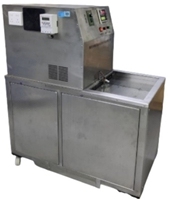
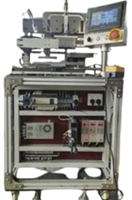
Equally important to material quality is the verification of sensor accuracy. Horle recognizes that a thermistor is only useful if its resistance-temperature relationship is precisely known and consistent. To guarantee this, Horle employs advanced testing equipment, including constant temperature oil baths. These precision oil baths maintain a stable, uniform temperature across a wide range (typically -40°C to +200°C), allowing Horle to verify each batch of NTC chips against reference standards. Chips that fall outside the specified tolerance are automatically rejected, ensuring that only components meeting industrial-grade precision reach the customer. For high-volume orders, Horle's semi-automatic testers and chip sorting machines further streamline this quality assurance process, providing traceable data for every production lot.
Conclusion: High-Quality Materials Are the Foundation of Accurate Temperature Control
In both the automotive and industrial sectors, the margin for error in temperature monitoring is vanishingly small. A failed coolant temperature sensor can ruin an engine. A drifting exhaust gas temperature reading can lead to DPF meltdown. An inaccurate industrial temperature measurement can cause production downtime or equipment damage. The common thread in all these scenarios is the quality of the NTC thermistor at the heart of the sensing system.
Choosing a supplier with deep technical expertise in NTC working principles, a proven track record in high-temperature stability, and a commitment to glass-encapsulated designs is not a procurement decision—it is a risk management decision. Horle, with approximately 20 years of experience and ISO9001 certification, offers exactly this level of reliability. From PEEK wire and fluoroplastic insulation to precision constant temperature oil bath testing, Horle provides the materials, the manufacturing knowledge, and the quality assurance systems necessary to ensure that every temperature sensor delivers accurate, stable readings for years of service in the harshest environments. When system safety and performance depend on precise temperature control, partnering with a supplier like Horle is not just beneficial—it is essential.