
Introduction: The Uncompromising Demands of Automotive Systems
Modern vehicles operate in environments that push electronic components to their limits. Underhood temperatures routinely exceed 150°C, while exhaust systems see sustained heat well beyond 250°C. Components endure continuous vibration from engine operation and road conditions, alongside exposure to corrosive agents such as road salts, brake fluid, engine oil, and combustion byproducts. For temperature sensing elements placed in these harsh conditions, failure is not an option—a single sensor malfunction can compromise emission control systems, reduce fuel efficiency, or trigger costly warranty claims.
Glass-encapsulated NTC (Negative Temperature Coefficient) thermistors have emerged as the preferred solution for these demanding applications. Their hermetically sealed construction provides a level of robustness that organic encapsulations cannot match, making them indispensable in critical automotive subsystems ranging from exhaust aftertreatment to powertrain thermal management .
Core Advantages: Why Glass Encapsulation Matters
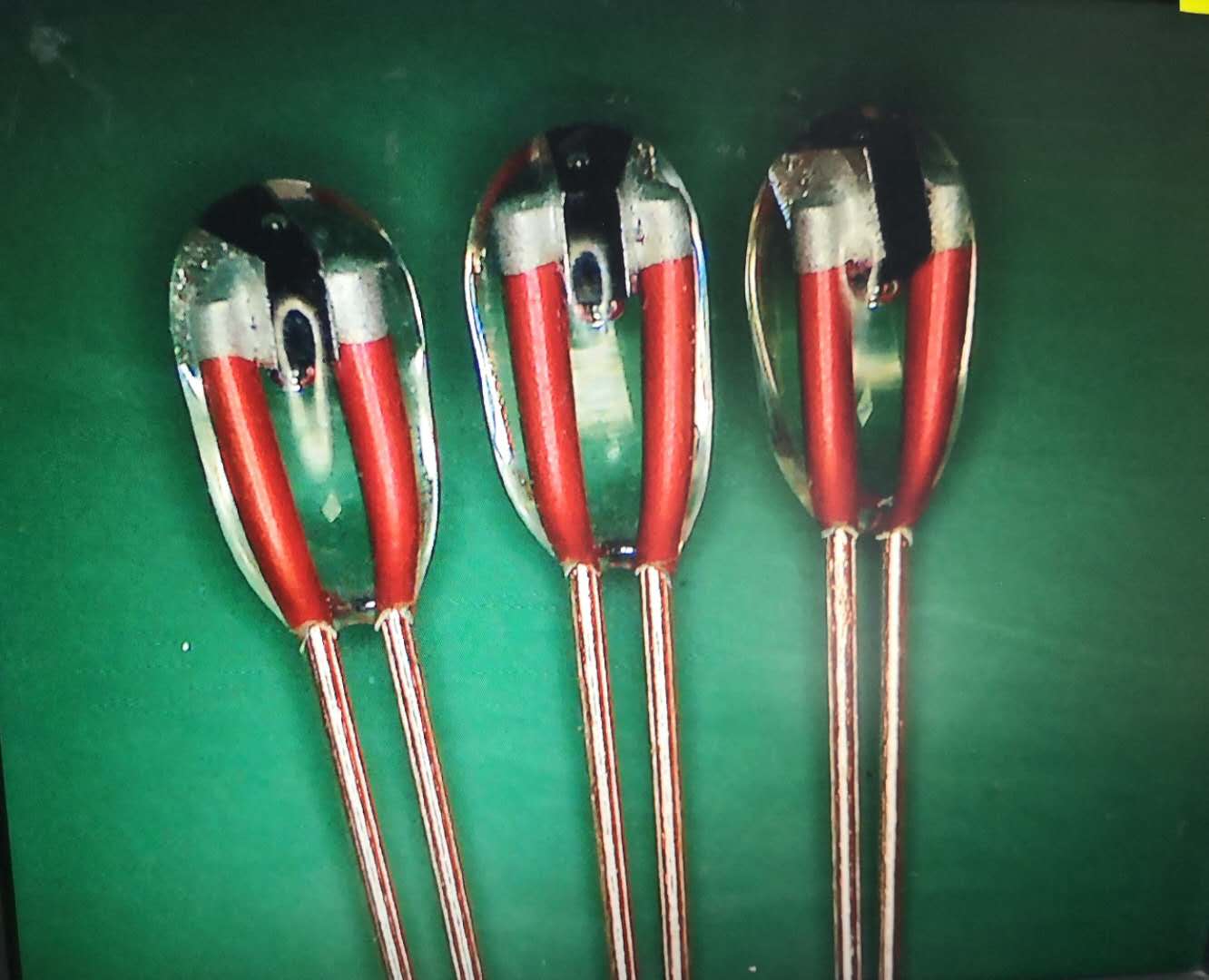
The superiority of glass-encapsulated NTC thermistors stems from their unique construction. A ceramic thermistor chip is hermetically sealed within a glass envelope, with lead wires metallurgically bonded to the sensing element. This design delivers three critical performance advantages for automotive applications.

Precision and Sensitivity
Accurate temperature measurement is fundamental to modern engine management and emission control strategies. Glass-encapsulated NTC thermistors offer tight tolerances on both resistance and B-value, with recent AEC-Q200 certified devices achieving ±1% tolerance across temperature ranges from -55°C to +150°C . This precision enables engine control units to make real-time adjustments to fuel injection timing, air-fuel ratios, and selective catalytic reduction (SCR) dosing rates—directly impacting emissions compliance and fuel economy.
Durability Under Extreme Conditions
The glass body provides complete hermetic sealing and voltage insulation, protecting the thermistor element from moisture ingress, corrosive atmospheres, and chemical attack . This robustness is particularly valuable in automotive environments where sensors are exposed to engine oil, transmission fluid, coolant, and exhaust gases. The construction also withstands the mechanical stresses of thermal cycling and vibration—the PSB-S1 series, for instance, has maintained a production track record exceeding 30 years in automotive and appliance applications .
Long-Term Stability
Resistance drift over time is a primary failure mode for temperature sensors. The hermetic seal of glass encapsulation prevents the oxidation and contamination that can alter the electrical characteristics of the thermistor element. This stability translates to sustained measurement accuracy throughout a vehicle's service life, reducing the need for recalibration and ensuring that emission control systems remain effective as the vehicle ages. Some glass-encapsulated designs also demonstrate resistance to electrostatic discharge (ESD), with ESD withstand capability exceeding 25 kV in human body model testing .
Automotive Applications: Where Glass-Encapsulated NTC Thermistors Excel
NOx Sensors and Exhaust Temperature Monitoring
Exhaust aftertreatment systems depend on precise temperature measurement for proper operation. In diesel applications, selective catalytic reduction systems require accurate exhaust temperature data to control urea dosing and maintain optimal catalyst conversion efficiency. The NTC element serves as the sensing core in catalytic converter temperature sensors, where the resistance change directly correlates with exhaust gas temperature—enabling the engine control unit to monitor oxidation catalyst function as part of onboard diagnostics . These sensors must withstand sustained exposure to high-temperature exhaust flows while maintaining measurement fidelity. Glass-encapsulated thermistors operating up to 300°C are well-suited to this role .
Powertrain Thermal Management
Accurate temperature monitoring of engine coolant and lubricating oil is essential for protecting powertrain components and optimizing thermal efficiency. These fluids can reach temperatures exceeding 120°C under heavy load, and sensor response time is critical for thermal management strategies that balance performance, emissions, and component durability. Glass-encapsulated thermistors with thermal time constants as low as 12 seconds provide the responsiveness required for real-time control .
Battery and Motor Temperature Sensing in Electrified Vehicles
The transition to electric and hybrid vehicles has created additional demands for robust temperature sensing. Battery packs require monitoring of individual cell temperatures to prevent thermal runaway and optimize charging strategies. Electric motor windings operate at elevated temperatures that can degrade insulation and permanent magnets. Glass-encapsulated thermistors offer the thermal stability and electrical insulation needed for these safety-critical applications. Devices have been deployed in battery temperature monitoring, motor thermal management, and power electronics cooling .
Temperature Compensation in Electronic Modules
Beyond direct temperature measurement, glass-encapsulated NTC thermistors provide temperature compensation for sensitive electronic circuits. Automotive LED lighting modules, camera modules, radar and LiDAR sensors, and electronic control units all contain components whose performance shifts with temperature. Surface-mount glass-encapsulated thermistors in 0402 packages allow designers to implement compensation circuits directly on the PCB, maintaining consistent performance across the full automotive temperature range .
Material Selection: Lead Wires and Insulation
The performance of a thermistor assembly depends not only on the sensing element but also on the materials used for leads and insulation. Different applications demand different material choices.
Lead Wire Options
For general-purpose applications, copper-clad steel wires with solder coating offer a cost-effective solution with adequate corrosion resistance. Where higher temperature capability or improved solderability is required, silver-plated nickel leads provide superior performance. The choice of lead material affects not only electrical and thermal characteristics but also mechanical reliability—metallurgically bonded leads, as featured in some glass-diode designs, improve resistance to shock and vibration .
Insulation Materials for Harsh Environments
In applications where leads are exposed to engine oil, fuel, or other aggressive fluids, insulation material selection becomes critical. PEEK (polyetheretherketone) and PTFE (polytetrafluoroethylene) insulation offer excellent chemical resistance and high-temperature stability, making them suitable for in-tank fuel sensors and engine compartment wiring. Cross-linked polyethylene (XLPE) insulation provides a balance of performance and cost for less demanding environments .
Conclusion: Enabling the Future of Safer Mobility
The relentless push for lower emissions, higher efficiency, and greater vehicle reliability places ever-increasing demands on automotive sensors. Glass-encapsulated NTC thermistors have proven themselves as a cornerstone technology in this evolution—providing the precision, durability, and stability that modern automotive systems require. From monitoring exhaust temperature in diesel aftertreatment to protecting battery packs in electric vehicles, these hermetically sealed sensors deliver consistent, reliable performance in conditions that would rapidly degrade alternative technologies.
As vehicle electrification and automation continue to advance, the role of glass-encapsulated NTC thermistors will only expand. New applications in thermal management of power electronics, protection of autonomous driving sensors, and monitoring of high-voltage battery systems all benefit from the unique combination of precision and robustness that glass encapsulation provides.
Horle, as an ISO9001-certified manufacturer with deep expertise in automotive-grade NTC thermistor technology, stands ready to support these evolving application requirements. With a commitment to quality manufacturing and proven performance in the field, Horle continues to deliver temperature sensing solutions that enhance the safety, efficiency, and reliability of modern vehicles.