
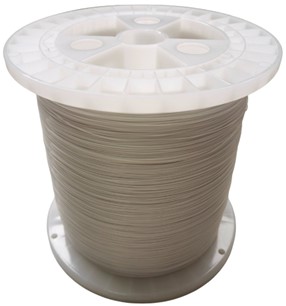
In the hierarchy of high-performance cabling, Silver Plated Nickel (SPN) PTFE Wire occupies a unique niche. It is engineered for environments where standard copper fails. By combining the oxidation resistance of silver, the mechanical rigidity of nickel, and the chemical inertness of PTFE, this composite wire offers a "fail-safe" solution.
This article explores why industries ranging from aerospace to medical technology rely on SPN wire for their most critical systems.
1. Electronics: High-Reliability Interconnects
Focus: Solderability & Signal Integrity
In precision electronics, the "weak link" is often the termination point. Bare nickel is notoriously difficult to solder due to passivation. Horle's SPN wire solves this with a high-purity silver coating. This ensures instant solder wetting and low contact resistance, which is critical for:
- Chip Testing & Burn-in: Withstanding high-temperature test cycles without oxidation.
- PCB Termination: Preventing "cold joints" in high-vibration environments.
- Miniaturized Connectors: The thin PTFE wall allows for higher density without signal crosstalk.
2. Automotive: The "Under-the-Hood" Solution
Focus: Thermal Stability (Not just Conductivity)
Modern automotive engine bays are hostile environments, with ambient temperatures frequently exceeding 150°C. Unlike copper, which softens and corrodes at these temperatures, Nickel 200/201 retains its tensile strength. The silver plating prevents the "Red Plague" (galvanic corrosion) common in high-heat zones. Key Applications:
- Oxygen Sensors (O2): Withstanding exhaust heat.
- Transmission Control Units (TCU): Resisting transmission fluid and heat soak.
- Battery Management Systems (BMS): Ensuring safety in EV high-voltage architectures.
3. Medical Devices: Sterilization & Safety
Focus: Chemical Inertness & Dielectric Strength
Medical OEMs demand materials that are biologically safe and chemically robust. The PTFE insulation is the hero here. It is chemically inert, meaning it will not degrade when exposed to aggressive cleaning solvents or bodily fluids. Furthermore, the wire withstands repeated autoclave sterilization cycles (high pressure steam) without cracking. Key Applications:
- Electrosurgical Pencils: High voltage breakdown resistance in a thin profile.
- Endoscopy Modules: signal transmission in miniaturized probes.
- Patient Monitoring: Flexible, lightweight cabling that resists hospital disinfectants.
4. Industrial Automation: Surviving the Factory Floor
Focus: Durability in Harsh Environments
Factory floors are rife with oil, hydraulic fluid, and constant vibration. Standard PVC wires become brittle and crack under these conditions. SPN PTFE wire offers exceptional fatigue resistance. The nickel core resists mechanical stress, while the PTFE jacket is immune to industrial lubricants and solvents. Key Applications:
- Robotic Arms: Wiring that survives millions of flex cycles.
- High-Temp Sensors: Thermocouple extensions in blast furnaces or molding machines.
- Instrumentation: Reliable data transmission in electrically noisy environments.
Summary
Silver Plated Nickel PTFE wire is not just a cable; it is an insurance policy against failure. Whether ensuring a surgical instrument works during a procedure or keeping a vehicle sensor accurate at 260°C, this material combination delivers performance that standard wires cannot match.
FAQ
Q1: What is the maximum operating temperature for this wire?
A: The wire is rated for continuous operation at 260°C. The nickel core itself can withstand much higher temperatures, but the rating is limited by the PTFE insulation.
Q2: Why use Silver Plated Nickel instead of Silver Plated Copper (SPC)?
A: Corrosion and Strength. SPC is prone to corrosion (Red Plague) above 200°C. Nickel is immune to this and retains its mechanical strength much better than copper in high heat.
Q3: Is the PTFE insulation resistant to oil and gas?
A: Yes. PTFE is chemically inert and is virtually immune to all common industrial solvents, fuels, oils, and acids.
Q4: Is this wire difficult to strip or terminate?
A: No. While PTFE is tough, standard precision wire strippers work perfectly. The silver plating ensures the conductor is extremely easy to solder or crimp compared to bare nickel.
Q5: Can this wire be used for high-voltage applications?
A: Yes. PTFE has excellent dielectric strength (~60kV/mm). We can customize the insulation wall thickness to meet specific voltage requirements (e.g., 600V, 1000V) while keeping the wire diameter small.