
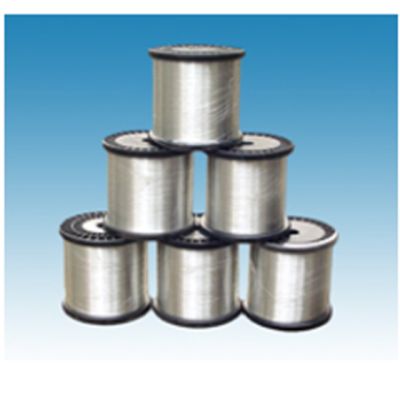
Medical wire is not simply standard wire with a medical label. The conductor, coating, insulation, and manufacturing documentation must all support the final device’s safety, reliability, and regulatory submission.
This guide breaks down the key decisions for selecting medical fine wire and cable.
How Medical Wire Differs from Standard Industrial Wire
Medical applications often require:
- Small diameters and flexible constructions.
- Controlled conductor resistance.
- Clean surfaces and low particle contamination.
- Biocompatibility evaluation.
- Compatibility with sterilization.
- Strong lot traceability.
- Consistent material documentation.
For a general overview, see our existing article on medical wire and cable solutions.
Step 1: Choose the Conductor Material
The conductor carries the signal or electrical current, so its material affects resistance, flexibility, strength, and reliability.
Common conductor materials include:
- Copper and copper alloys.
- Nickel and nickel alloys.
- Stainless steel.
- Silver or silver-coated conductors.
- Composite or plated conductors.
For sensor and signal applications, low and stable resistance is usually important. For guidewires or structural components, mechanical strength may be more critical.
If the wire must support temperature sensing, it should be selected together with the NTC element. Our glass encapsulated NTC thermistors are often combined with fine lead wires in medical temperature probes.
Step 2: Choose the Coating or Plating
Coating and plating affect solderability, corrosion resistance, and surface conductivity.
Common options include:
- Silver coating for high conductivity.
- Nickel coating for corrosion resistance.
- Tin coating for standard solderability.
- Gold coating for high-reliability connections.
For high-conductivity applications, review our silver-coated nickel wire. For general sensor and connection use, see our tin-coated nickel wire.
The final coating choice must be compatible with the joining process, whether soldering, welding, crimping, or conductive adhesive bonding.
Step 3: Choose the Insulation
Insulation prevents short circuits, protects the conductor, and affects flexibility, temperature resistance, and chemical compatibility.
Common insulation materials include:
- PTFE, PFA, FEP, and ETFE for high-temperature or low-friction requirements.
- PEEK for high strength and good temperature resistance.
- Silicone for flexibility.
- Polyurethane for abrasion resistance.
- Enamel coatings for very small or tightly wound coils.
For high-performance insulation, review our PEEK insulated wire.
The insulation must also be compatible with the final device’s sterilization method and any cleaning or coating processes.
Step 4: Define the Cable Construction
Medical wire can be supplied as:
- Single conductor.
- Twisted pair.
- Twin or multi-conductor cable.
- Shielded cable.
- Coiled or retractable cable.
- Custom composite cable.
The construction depends on whether the wire is used for temperature sensing, patient monitoring, power delivery, or signal transmission.
For temperature probe assemblies, the wire and housing must be designed together. Review our sensor housings when the wire will be integrated into a sealed probe.
Step 5: Evaluate Biocompatibility and Sterilization
Not all medical wire is automatically biocompatible. Biocompatibility depends on the complete device, including the conductor, coating, insulation, and any processing residues.
Key questions include:
- Which part of the device contacts the patient?
- What is the contact duration and tissue type?
- Which biocompatibility tests are required?
- Which sterilization method will be used: steam, EtO, radiation, or another method?
- Does the material remain stable after repeated sterilization?
This article is not a substitute for device-specific biological evaluation. Final biocompatibility must be confirmed through the medical device manufacturer’s risk management and testing process.
Step 6: Confirm Quality and Traceability
Medical customers usually expect more than a material certificate. Ask for:
- ISO 13485 quality system evidence where applicable.
- Lot-level traceability from raw material to finished wire.
- Change control process.
- Incoming material inspection records.
- Process validation for critical operations.
- Cleanliness or contamination control procedures.
- Long-term availability and revision control.
For background on wire material selection, see our guide on how to choose the right wire material for lead wires.
Common Medical Applications
Medical fine wire and cable are used in:
- Temperature probes and thermistor assemblies.
- Patient monitoring cables.
- Catheters and guidewires.
- Surgical instruments.
- Diagnostic equipment.
- Wearable medical devices.
Each application has different requirements for flexibility, diameter, insulation, sterilization, and traceability. The wire should be specified early in the design process rather than treated as a last-minute component.
Medical Fine Wire and Cable Selection Checklist
Before requesting a quote, prepare these details:
- Conductor material and diameter.
- Coating or plating.
- Insulation material and wall thickness.
- Single wire, twisted pair, or multi-conductor cable.
- Shielding requirement.
- Flexibility and minimum bend radius.
- Temperature range.
- Sterilization method.
- Biocompatibility requirements.
- Required documentation and traceability level.
- Target annual volume and delivery schedule.
How HORLE Supports Medical Sensor and Wire Projects
HORLE supplies NTC thermistors, lead wires, coatings, and sensor housings from one manufacturing system. That can reduce the number of suppliers and make material traceability easier to manage.
For a broader medical wire overview, read medical wire: the powerhouse material for the medical field. For a complete supply-chain perspective, see our guide on how to choose a one-stop supplier for NTC thermistor and temperature sensor materials.
Frequently Asked Questions
Is silver-coated nickel wire suitable for medical sensors?
It can be suitable for many signal and temperature-sensing applications, but the final choice depends on biocompatibility, sterilization, soldering, and the device’s regulatory requirements.
Can PEEK insulated wire replace PTFE in medical devices?
PEEK can replace PTFE in some high-performance applications, but it has different flexibility, processing, and chemical resistance. It should be evaluated against the specific device requirements.
Is medical wire always biocompatible?
No. Biocompatibility is determined at the finished device level, not by the wire material alone. The conductor, coating, insulation, processing residues, and final device design all matter.
What documentation should I request from a medical wire supplier?
Request lot traceability, material certificates, process validation records, change control information, and quality system evidence such as ISO 13485 where applicable.
How do I choose between single wire and multi-conductor cable?
Choose based on the signal and power requirements. A temperature probe often uses a single or twin lead wire, while patient monitoring or diagnostic equipment may require a shielded multi-conductor cable.
Next Step
Define the conductor, coating, insulation, cable construction, sterilization method, and traceability requirements before requesting samples. Then confirm the material documentation matches the final device’s regulatory needs.
Review our silver-coated nickel wire, PEEK insulated wire, sensor housings, or the full HORLE product range to continue the selection process.