
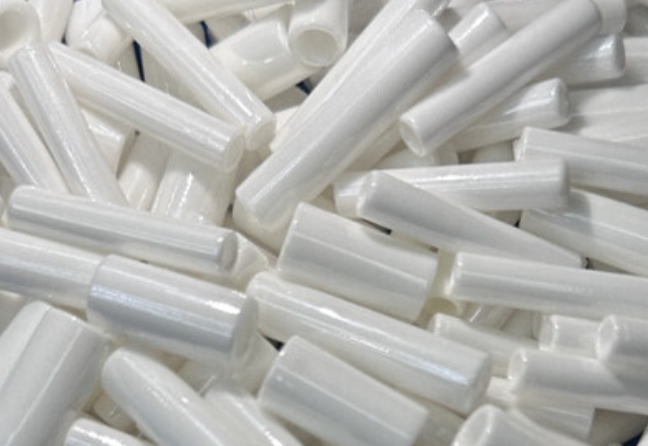
An NTC thermistor probe is more than just a chip. It is a complete sensing assembly that must survive the application environment, respond quickly enough, and connect reliably to the system.
This guide explains what an NTC thermistor probe is, the common types, and what to check before you order one.
What Is an NTC Thermistor Probe?
An NTC thermistor probe is a temperature sensor built from an NTC thermistor chip packaged inside a protective housing, with lead wires or a connector for electrical connection.
The chip itself provides the negative temperature coefficient behavior. The probe protects the chip and makes it practical to mount in real equipment.
If you want to understand the basic sensing element first, see our article on what an NTC sensor is.
What Makes Up an NTC Probe
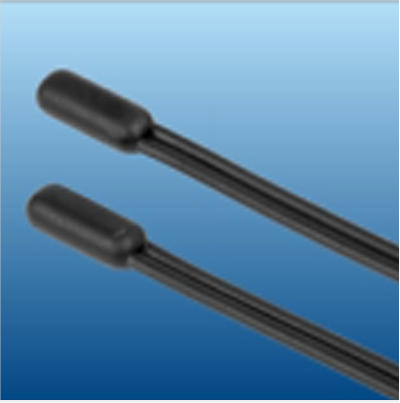
A typical probe contains:
- An NTC chip or bead.
- A housing, usually metal or plastic.
- Lead wires or a cable.
- Potting or sealing material.
- A connector or terminal, if required.
Each part affects accuracy, durability, response time, and cost. For the sensing element, review our NTC thermistor chips.
Common NTC Probe Types
Threaded Probe
A threaded probe screws into a mounting hole or fitting. It is common in industrial equipment, boilers, and HVAC systems where the sensor must be held firmly against the measured medium.
Lug or Ring Terminal Probe
A lug or ring terminal probe is bolted to a surface. It is often used to monitor battery terminals, heat sinks, or motor housings.
Immersion Probe
An immersion probe is inserted into a liquid. It is used for water, oil, and process fluid temperature measurement and usually requires a sealed housing.
Needle or Pointed Probe
A needle probe has a narrow tip and is designed to pierce food, rubber, or other soft materials for spot temperature measurement.
Surface-Mount Probe
A surface-mount probe is pressed against a flat surface. It works well for pipes, plates, and enclosures where direct contact is possible.
Clamp-On Probe
A clamp-on probe attaches to a pipe or tube without breaking into the system. It is convenient for retrofit installations.
The housing type should be selected together with the mounting method. Review our sensor housings for available options.
How to Choose R25 and B Value
R25
R25 is the probe resistance at 25°C. It must match the input circuit, usually a voltage divider or a constant-current source.
B Value
The B value describes how the resistance changes with temperature. A probe with the same R25 but a different B value will not produce the same temperature reading.
If you are unsure which values fit your circuit, start from the controller or readout specification and work backward to the probe.
Probe Resistance and Tolerance
The resistance tolerance affects temperature accuracy. Common tolerances are expressed as a percentage of R25, but the resulting temperature error also depends on the B value.
For tighter temperature control, choose a closer resistance tolerance and a well-controlled B value. For simple over-temperature switching, a wider tolerance may be enough.
If you need higher stability in harsh conditions, compare the design with our glass encapsulated NTC thermistors.
Housing Material and Sealing
The housing protects the chip from moisture, chemicals, and mechanical damage.
Common housing materials include:
- Stainless steel for durability and corrosion resistance.
- Brass or copper for good thermal conductivity.
- Aluminum for lighter weight.
- Plastic for cost-sensitive indoor applications.
Sealing method also matters. A probe used in liquid, condensation, or outdoor conditions needs proper potting or a sealed housing. Read temperature sensor housing: protection, precision, and performance for more detail.
Lead Wire and Termination
The lead wire carries the signal from the probe to the controller. Its insulation must handle the operating temperature and environment.
Common insulation materials include PVC, silicone, PTFE, PFA, and PEEK. For higher-temperature or harsh-environment probes, choose an insulation that matches both temperature and chemical exposure.
For help with wire selection, see our guide on how to choose the right wire material for lead wires.
Accuracy and Response Time
Accuracy is usually stated as a temperature tolerance, such as ±0.1°C, ±0.2°C, or wider. Response time depends on:
- Housing material and wall thickness.
- Thermal contact between the chip and the housing.
- The medium being measured.
- Whether thermal compound is used.
A thicker metal housing is more durable but may respond more slowly. A thin-wall or bead-style probe usually responds faster.
How to Choose the Right NTC Probe
| Application | Typical probe choice |
|---|---|
| HVAC and boilers | Threaded or immersion probe |
| Battery packs and power electronics | Lug terminal or surface-mount probe |
| Food and spot measurement | Needle or pointed probe |
| Pipe retrofit | Clamp-on or surface-mount probe |
| Laboratory and precision measurement | Thin-wall stainless steel or bead probe |
| Outdoor or wet environments | Sealed stainless steel probe |
This table is a starting point. The final choice should be confirmed against temperature range, accuracy, and mounting space.
What to Confirm Before Ordering
Before requesting a quote, prepare these details:
- R25 value and B value.
- Resistance tolerance or temperature accuracy.
- Probe type and mounting method.
- Housing material and dimensions.
- Lead wire length and insulation.
- Connector type, if any.
- Operating temperature range.
- Medium:air, water, oil, surface, or food.
- Required response time.
- Target quantity and delivery requirement.
If you are looking for a supplier that can provide the chip, wire, housing, and probe assembly together, read our guide on how to choose a one-stop supplier for NTC thermistor and temperature sensor materials.
Frequently Asked Questions
What is the difference between an NTC thermistor and an NTC probe?
The thermistor is the sensing chip. The probe is the finished assembly that includes the chip, housing, lead wire, and sealing.
Can I use any R25 probe in my controller?
No. The probe must match the controller’s input curve, including both R25 and B value. Replacing with a different B value can shift the reading.
How do I know if I need a sealed probe?
If the probe will be exposed to liquid, condensation, washing, or outdoor weather, choose a sealed or potted probe.
What affects response time?
Housing material, wall thickness, thermal contact, and the measured medium all affect response time. Thin-wall and bead-style probes usually respond faster.
What should I tell the supplier when I order a probe?
Provide R25, B value, tolerance, probe type, housing material, lead wire length and insulation, operating temperature range, and target quantity.