
PFAS-free is no longer just a niche requirement. European regulation, medical device programs, and industrial OEM specifications are increasingly asking whether sensors, wires, and coatings contain per- and polyfluoroalkyl substances.
For temperature sensor buyers, this creates a practical question: how do you specify an NTC thermistor that meets performance requirements without using PFAS-based materials?
This guide explains where PFAS appears in NTC thermistor assemblies, which alternatives are available, and what documentation you should request from a supplier.
What Does “PFAS-Free” Mean for an NTC Thermistor?
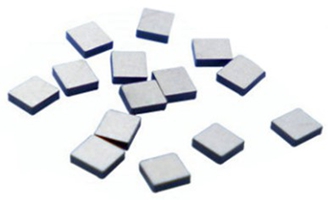
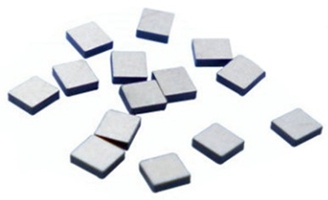
An NTC thermistor itself is usually a ceramic semiconductor chip. The chip does not normally require PFAS to function. The compliance challenge often comes from the materials around the chip:
- Lead wire insulation.
- Cable jackets.
- Coatings and potting compounds.
- Adhesives and seals.
- Heat-shrink tubing.
- Lubricants or process aids used during manufacturing.
A PFAS-free claim must therefore cover the complete assembly, not only the ceramic element.
For chip-based designs, review our NTC thermistor chips. For sealed designs, our glass encapsulated NTC thermistors can simplify material selection when combined with suitable lead wires and coatings.
Why PFAS Matters in Temperature Sensors
PFAS materials are widely used because they offer chemical resistance, high-temperature performance, low friction, and electrical insulation. Common fluoropolymers such as PTFE, PFA, FEP, and ETFE are all PFAS-related materials.
That performance comes with growing regulatory risk. Many manufacturers are now evaluating PFAS-free alternatives before customers make it a mandatory requirement.
Where PFAS Is Commonly Found in Sensor Assemblies
Lead Wire and Cable Insulation
PTFE, PFA, FEP, and ETFE are common in high-temperature sensor wires. They can appear in:
- Single-conductor lead wires.
- Twin or multi-conductor cables.
- Shielded medical or industrial cable assemblies.
Coatings and Encapsulation
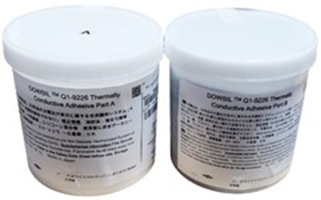
Some sensor assemblies use fluoropolymer coatings or PTFE-based potting materials. Epoxy systems may or may not be PFAS-free depending on the specific formulation.
If you need a controlled potting or encapsulation material, review our epoxy resin and confirm the formulation with our team.
Seals, Tapes, and Process Aids
PFAS can also appear in seals, lubricants, release agents, and manufacturing process aids. A supplier that only tests the final chip may miss these sources.
Regulatory Context to Watch
EU REACH
The European Chemicals Agency has been working on a broad restriction proposal for PFAS under REACH. If adopted, it would affect many fluoropolymer applications across industries.
Customer-Specific Requirements
Many medical, semiconductor, and automotive customers are moving faster than regulation. They may require:
- PFAS-free declarations.
- Full material disclosures.
- IMDS or compliance data.
- Approved alternative materials.
U.S. and Other Regional Rules
State-level PFAS restrictions and reporting requirements are also expanding. Buyers selling into multiple regions should track both EU and North American requirements.
This article is not legal advice. Final compliance must be confirmed with the material supplier and the customer’s specific specification.
PFAS-Free Alternatives for NTC Thermistor Assemblies
Glass Encapsulation
Glass-encapsulated NTC thermistors can reduce reliance on plastic coatings because the sensing element is sealed in glass. The remaining compliance question is usually the lead wire and any additional outer covering.
Explore our glass encapsulated NTC thermistors for high-stability sensing applications.
PEEK Insulated Wire
PEEK is a high-performance polymer that is often considered as a fluoropolymer alternative in demanding applications. It offers good temperature resistance and mechanical strength, but its chemical and flexibility profile is different from PTFE or PFA.
Learn more about PEEK insulated wire.
Bare, Plated, or Coated Metal Wire
For some sensor designs, bare metal wire, enameled wire, or metal-coated wire can replace fluoropolymer-insulated wire.
Relevant options include:
The right choice depends on temperature, flexibility, insulation resistance, and chemical exposure.
Epoxy and Silicone Systems
Some epoxy or silicone systems can be formulated without PFAS. These are not direct replacements for fluoropolymers in every case, so they should be evaluated against the full application environment.
How to Specify a PFAS-Free NTC Thermistor
When requesting a quote, include this information:
- R25 resistance and B value.
- Tolerance or accuracy class.
- Operating temperature range.
- Package type: chip, glass encapsulated, epoxy coated, or probe.
- Required lead wire and insulation.
- PFAS-free scope: chip only, wire only, or complete assembly.
- Customer specification or regulation to meet.
- Required documentation: SDS, material declaration, lab report, IMDS.
- Target market: EU, North America, medical, industrial, automotive.
For help choosing the correct wire material, read our guide on how to choose the right wire material for lead wires.
Supplier Qualification Checklist
A credible PFAS-free supplier should be able to provide more than a generic statement. Ask for these documents and confirmations:
- A written PFAS-free scope definition.
- Material declaration for the complete assembly.
- SDS for coatings, adhesives, and insulation.
- Third-party test reports where required.
- Batch traceability for materials.
- Change control process if a material or supplier changes.
- Confirmation of process aids and cleaning agents.
- Signed declaration against the customer specification.
Why HORLE Is Positioned for PFAS-Free Sensor Projects
HORLE supplies thermistor chips, lead wires, housings, and assembly materials from one manufacturing system. That makes it easier to review the full material chain instead of qualifying several separate suppliers.
Our process covers raw materials, chip fabrication, lead wire preparation, assembly, and testing. Learn more in our article on the complete manufacturing process of high-quality NTC thermistors.
If you need a supplier that can coordinate thermistor and temperature sensor materials, see our guide on how to choose a one-stop supplier for NTC thermistor and temperature sensor materials.
Frequently Asked Questions
Is a ceramic NTC chip automatically PFAS-free?
The ceramic chip itself may not require PFAS, but the complete assembly can still contain PFAS in wire insulation, coatings, adhesives, or seals. The final product must be evaluated as a whole.
Can PEEK wire replace PTFE wire in every application?
No. PEEK has different flexibility, chemical resistance, and processing characteristics. It is a strong candidate in many high-temperature applications, but it must be tested against the specific environment.
Is epoxy encapsulation PFAS-free?
Not always. Epoxy formulations vary. The supplier should provide a material declaration or test report for the specific epoxy system.
What should I ask a supplier before ordering PFAS-free NTC thermistors?
Ask them to define the PFAS-free scope and provide SDS, material declarations, test reports, and batch traceability for the complete assembly.
Do PFAS-free alternatives always cost more?
Not necessarily. Cost depends on the material, performance requirements, volume, and documentation level. In some designs, a simpler bare wire or glass-encapsulated solution can reduce material and compliance cost.
Next Step
Start with your application environment and required documentation. Then confirm whether PFAS-free applies to the chip only, the lead wire, the coating, or the full assembly.
Review our glass encapsulated NTC thermistors, PEEK insulated wire, and the full HORLE product range to begin the material selection process.