

When engineers compare NTC thermistors, they often focus on R25 and B value. But for long-term accuracy, the electrode material matters just as much. The choice between a gold electrode and a silver electrode affects drift, solderability, moisture resistance, and cost.
In this guide, we compare gold electrode and silver electrode NTC thermistors across the factors that matter most in medical, automotive, industrial, and consumer applications.
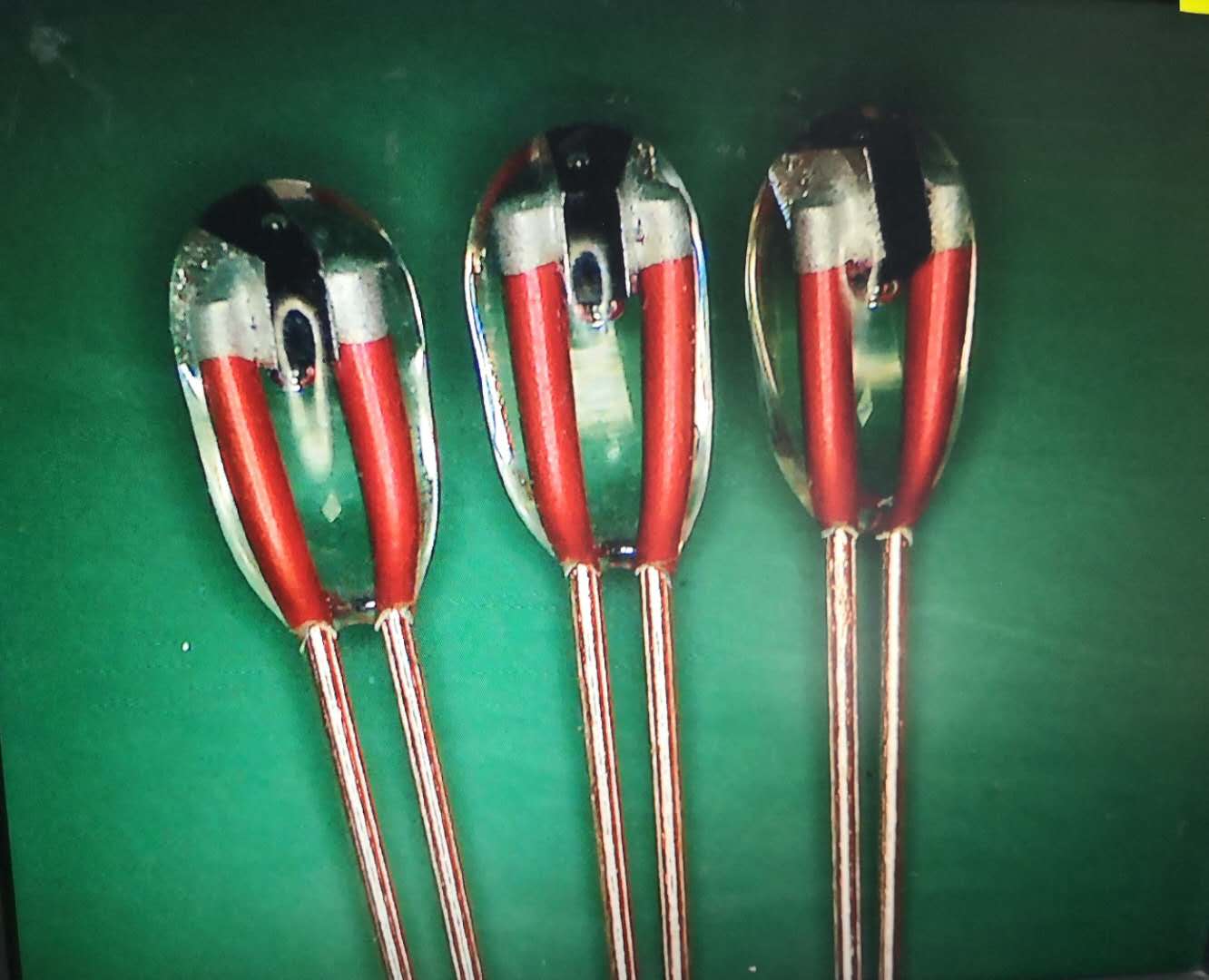
Why the Electrode Material Matters
An NTC thermistor works by changing resistance as temperature changes. The electrode is the connection point between the thermistor chip and the lead wire, solder joint, or PCB pad. If the electrode oxidizes, corrodes, or forms an unstable interface, the resistance reading can shift over time.
For most NTC chips, the electrode must do several jobs at once:
- Carry a stable electrical signal.
- Survive soldering without delaminating.
- Resist moisture and chemical attack.
- Maintain stable contact resistance over the product life.
That is why the electrode is not just a minor material choice. It is part of the long-term accuracy of the sensor.
If you need to understand the basic operating principle first, see our article on the working principle of an NTC thermistor.
What Is a Gold Electrode NTC Thermistor?
A gold electrode NTC thermistor uses a gold-based termination or thin-film electrode. Gold is chemically stable, resists oxidation, and performs well in high-humidity or corrosive environments.
Gold electrode thermistors are often specified where long-term stability and low contact resistance are critical. Typical applications include:
- Medical temperature probes.
- High-precision instrumentation.
- Automotive sensors exposed to moisture.
- Industrial control systems with long service life.
- Hermetically sealed sensor assemblies.
Explore our gold electrode NTC thermistors for available configurations.
Advantages of Gold Electrode
The main advantages of a gold electrode are:
- Excellent resistance to oxidation.
- Low and stable contact resistance.
- Strong performance in humid or chemically aggressive environments.
- Good compatibility with wire bonding and high-reliability assembly.
- Lower risk of long-term drift in precision sensing.
Trade-offs of Gold Electrode
Gold is more expensive than silver. It is not always necessary for consumer products, cost-sensitive designs, or applications with short service life. Gold may also require careful solder or assembly process control when conventional tin-lead solder is used.
What Is a Silver Electrode NTC Thermistor?
A silver electrode NTC thermistor uses silver or a silver-based termination. Silver offers very high electrical conductivity and good solderability, which makes it a practical choice for many standard temperature-sensing circuits.
Silver electrode thermistors are widely used in:
- Consumer electronics.
- Appliance temperature control.
- General industrial sensing.
- PCB-mounted temperature compensation.
- Cost-sensitive automotive and HVAC designs.
Explore our silver electrode NTC thermistors for standard and custom requirements.
Advantages of Silver Electrode
The main advantages of a silver electrode are:
- High electrical conductivity.
- Good solderability.
- Lower material cost.
- Good availability for high-volume production.
- Proven performance in standard indoor environments.
Trade-offs of Silver Electrode
Silver is more sensitive to sulfur-containing atmospheres and can tarnish over time. In high-humidity, high-sulfur, or chemically aggressive environments, silver may require additional protection, coating, or a different termination system.

Gold vs Silver Electrode: Side-by-Side Comparison
| Selection factor | Gold electrode | Silver electrode |
|---|---|---|
| Corrosion resistance | High | Moderate |
| Oxidation resistance | High | Moderate |
| Long-term drift | Typically lower | Depends on environment |
| Solderability | Good with suitable process | Very good |
| Moisture resistance | Strong | Requires protection in harsh conditions |
| Electrical conductivity | Good | Very high |
| Cost | Higher | Lower |
| Best fit | High-reliability, medical, harsh environment | Consumer, standard industrial, cost-sensitive |
This table should be used as a general guide. Final material choice should always be verified against the application environment, soldering process, and reliability test requirements.
How to Choose Between Gold and Silver Electrode NTC Thermistors
Choose Gold Electrode When
Select a gold electrode when the application has one or more of these requirements:
- Long-term measurement stability is critical.
- The sensor will be exposed to humidity or condensation.
- The assembly requires wire bonding or a high-reliability interconnect.
- The product must pass strict drift or life testing.
- The sensor is used in medical, aerospace, or precision instrumentation.
For high-stability glass-sealed designs, also review our glass encapsulated NTC thermistors.
Choose Silver Electrode When
A silver electrode is often the better choice when:
- The product is cost-sensitive.
- The sensor operates in a clean indoor environment.
- The design uses conventional soldering.
- Production volume is high.
- The required service life is moderate.
When Application Fit Is More Important Than Cost
Do not choose an electrode material only by price. A low-cost silver electrode may cause field failures if the sensor is later exposed to moisture or sulfur. A high-cost gold electrode may be unnecessary in a consumer product that is replaced every few years.
The right question is not simply “gold or silver?” but:
- What environment will the sensor see?
- How long must it remain accurate?
- How will the chip be connected?
- What reliability tests must the final product pass?
For a broader comparison of temperature sensing technologies, see NTC thermistor vs RTD vs thermocouple.
Specification Checklist Before Requesting a Quote
Before contacting a supplier, prepare these parameters. They help the factory recommend the correct electrode, package, and wire configuration.
- R25 resistance value.
- B value, such as B25/85 or B25/50.
- Resistance tolerance or temperature accuracy class.
- Operating temperature range.
- Chip size and package type.
- Electrode preference: gold, silver, or silver-palladium.
- Lead wire or SMD termination.
- Required soldering or wire bonding process.
- Environmental exposure: humidity, chemicals, sulfur, or condensation.
- Reliability tests: thermal shock, high-temperature storage, damp heat, drift.
If you are selecting a complete glass-encapsulated part, use our guide on how to choose the right glass encapsulated NTC thermistor.
How HORLE Supports Electrode Selection
HORLE supplies NTC thermistor materials, chips, lead wires, and sensor housings under one manufacturing system. Because the electrode, wire, and housing are selected together, we can help you avoid mismatches that cause drift or assembly failure.
Our process covers raw materials, chip fabrication, lead wire preparation, assembly, and testing. Learn more in our article on the complete manufacturing process of high-quality NTC thermistors.
If you are looking for a supplier that can provide multiple sensor materials from one source, read our guide on how to choose a one-stop supplier for NTC thermistor and temperature sensor materials.
Frequently Asked Questions
Is a gold electrode always better than a silver electrode?
No. Gold is usually better for corrosion resistance and long-term stability, but silver is often better for cost, solderability, and high-volume standard applications.
Does a silver electrode NTC thermistor drift more?
It can drift more in humid or sulfur-containing environments. In clean indoor conditions, a well-designed silver electrode thermistor can perform reliably for many years.
Can I use a gold electrode NTC thermistor with standard soldering?
It depends on the specific termination and assembly process. Work with the supplier to confirm the recommended solder, flux, and temperature profile.
Which electrode should I choose for a medical temperature probe?
Medical probes often require long-term stability, moisture resistance, and strict traceability, so gold electrode or glass-encapsulated designs are common choices. Final selection should follow the device’s validation and biocompatibility requirements.
Which electrode should I choose for a consumer appliance?
Silver electrode thermistors are usually more cost-effective for consumer appliances, especially when the sensor is protected from moisture and has a moderate service life.
Next Step
Choose a starting point based on your application environment, accuracy target, and production volume. If you are not sure which electrode is right for your design, contact us with your target R25, B value, package size, and operating environment.
View our gold electrode NTC thermistors, silver electrode NTC thermistors, or the full HORLE product range to start the selection process.